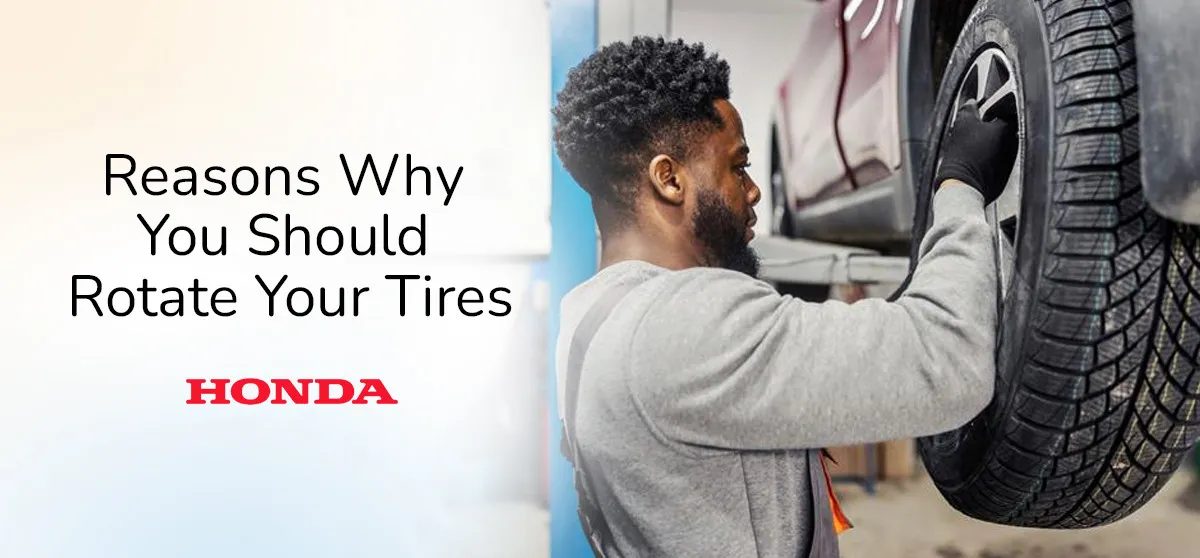
Tire rotationisoneofthosemaintenancedetailsmany drivers tendtooverlook. However, this simple serviceplays a key role in extending tire life, improving safety, and keepingyourvehicle running efficiently.Keepreadingtolearnwhy!
<H2>What's tire rotation?
Tire rotationinvolveschangingthe position ofyour tires—movingthemfromfronttorearorsidetoside—so theywearmore evenlyover time.
It's a fundamental partof regular vehiclemaintenance and helps preserve steeringprecision, vehiclestability, and braking performance, allwhilepromoting a smoother and saferdrivingexperience.
<H2>Why do tires wear unevenly?
Unevenoraccelerated tire wear can occurforseveralreasons, including:
Vehicletraction:
The type of traction dictates which tires work hardest, which directly affects the speed and wear pattern of the tires.
Engineplacement:
Thelocationoftheengineinfluenceshowweightisdistributedacrossthevehicle. Tires carrying more weightnaturallywearfasterthanthoseunderlighterloads.
Poor wheelalignment:
Misalignedwheelsprevent tires frommakingpropercontactwiththeroad. This leads to premature wear, reducedstability, and a lesssecuredrivingexperience.
Unevenly worn tires increase rolling resistance and can cause the vehicle to pull to one side, making the engine work harder and consume more fuel.
Enhances handling and safety:
Worn tires reduce grip and increasebrakingdistances, which can be especiallydangerous in rain, sharpturns, oremergencymaneuvers.
Preventssteeringstrain:
When tires wearunevenly, thevehiclemaydriftorpull, requiringconstantsteeringcorrections. Thisnotonlyaffectscomfortbutalsoputs extra strainonthevehicle.
How often should you rotate your tires?
The ideal rotation interval depends on several factors, including the type of tires you have, your driving habits, and the climate you live in.However, as a general guideline, rotate your tires every 8,000 to 10,000 km (4970-6213 mi), or at every scheduled maintenance service, whichever comes first.
Visit Honda Service Center
Rotating your tires on time helps extend their lifespan, improve driving safety, and maintain better fuel efficiency. Let our expert team take care of your vehicle at Honda Bermuda Service Center! We’re here to help keep every drive smooth and safe.Book your appointment today!